


What is Neural Organization Technique?
“For he who has health has hope; and he who has hope, has everything.”
– Owen Arthur
Neural Organization Technique is an extremely successful modality that deals with our primal survival systems of fight/flight, feeding, reproduction, and immune. The protocol maintains as its premise that everything that happens to us on a physical, chemical, or emotional level must be processed through one or more of these basic survival systems.
Our health depends on how well these systems are maintained in their ability to receive, process and respond to sensory information as well as adapt to a constantly changing environment of both internal and external stressors. The founding neurological principle behind Neural Organization Technique is the evaluation and therapeutic reintegration of the aberrant effects of the Vestibular System, its sub-components, and its effects on the Central, Autonomic, and Peripheral Nervous Systems. Neural Organization Technique is both a diagnostic and treatment methodology designed to address many of our present-day health issues. It is a holistic physical and energy medicine modality, based in Acupuncture, Applied Kinesiology and Chiropractic that deals with our primal survival systems of fight/flight, feeding, reproduction, and immune.
The protocol maintains as its premise that everything that happens to us on a physical, chemical, or emotional level must be processed through one or more of these basic survival systems. Our health depends on how well these systems are maintained in their ability to receive, process and respond to sensory information as well as adapt to a constantly changing environment of both internal and external stressors.
The founding neurological principle behind Neural Organization Technique is the evaluation and therapeutic reintegration of the aberrant effects of the Vestibular System, its sub-components, and its effects on the Central, autonomic, and Peripheral Nervous Systems. Neural Organization Technique is both a diagnostic and treatment methodology designed to address many of our present-day health issues.
HISTORY OF NEURAL ORGANIZATION TECHNIQUE –
as quoted by the founder, Dr. Carl A. Ferreri
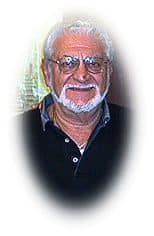
Dr. Carl Ferreri
1928-2007
For years many people and particularly the Neural Organization Technique practitioners have asked how I discovered the various protocols which make up what is now know as Neural Organization Technique. They wanted to know my thought processes, how I developed the logic of the treatment programs and how I discovered the logic of the body itself. I will try to give you at least some of the thought processes, more or less, how they happened. For as long as I can remember I was always interested in the human body and how it functioned.
There was very little spoken of back then in relation to healthy living with the exception of exercise and eating the “right” foods. Dietary implications and knowledge were just starting to come into vogue with people like Carlton Fredericks and a few others who for the most part were ridiculed as being some kind of charlatans. I had started out following in my father’s footsteps by attending law school. However, due to developments relative to my own health, allergies, unexplainable rashes on my skin, and sinus problems; and getting subsequent relief from these by virtue of chiropractic intervention, I did not finish my final exams in law. Thanks to my ailments I changed directions, studied and became a chiropractor instead.
Although I was reasonably successful with most of the patients, I was somewhat dissatisfied with chiropractic per se for a number of reasons. One was blind faith required that the “subluxation” was the primary consideration in health and disease.
I thought about all the other people in the world who did not go to a chiropractor.
Didn’t they have subluxations? How were they healthy?
I was also concerned that the lack of results in certain cases many times did not coincide with the philosophy of Chiropractic as I thought it should. Everything was somewhat haphazard.
There wasn’t Any Organization to the approach, to the ppatient andnothing was really happening on purpose. In fact ,technically you were not allowed to say that you treated this patient for any condition because that was considered the practice of medicine. Technically I could only say that I removed the subluxation and the healing powers of the body healed the problem or relieved the pain. This was essentially true however but this bothered me. I wanted to treat the patient and get a specific result on purpose and not by accident. I could not reproduce the results I wanted every time even if the same patient came in with the same condition months later. It became obvious that I needed to know more than what was taught in school. I started looking for other answers first in another Chiropractic technique not taught in Chiropractic Colleges known as Sacro-Occipital Technique and then Cranial Technique.
This study proved to be a fascinating adventure and gave me specific reproducible outcomes more often than anything else I had learned. As I became proficient with these techniques I was pleased to find out that the techniques had very specific neurological rules with demonstrable changes in body mechanics and structural positioning. Unfortunately for reasons I could never understand both of these techniques (the S.O.T. and Cranial) were, and still are, almost totally ignored by the Chiropractic profession and only allowed as off campus studies as is Kinesiology today. Oddly enough a very similar Osteopathic technique known as Sacro-Cranial Technique which has similar concepts and applications but is very much limited in its scope and application as compared to S.O.T., had been embraced by most of the Alternative Medical practitioners, Health and Nurse Practitioners, Kinesiologists and Chiropractors.
With the advent of Kinesiology I knew immediately that this was probably the most important advance of knowledge in the world of healing. Unfortunately, the Chiropractic world again chose to ignore these fantastic advances towards the understanding of the human condition. Dr. George Goodheart and other chiropractors formed an organization to promulgate and expand this new knowledge of kinesiology and kinesiological modalities. I became a member of this organization; which is known as the International College of Applied Kinesiology. Over a ten year period, I attended approximately 2500 hours of instruction, discussion, presentations, research and hands on practice to refine my knowledge, techniques, concepts and many personal observations which were published in my seminar notes.
I presented a number of research papers to the organization that were published in the Collected Papers of the ICAK over the years. One of the more simplified forms of Kinesiology which combines the muscle testing phenomenon, acupuncture knowledge and concepts, the use of the meridian energy system (from Acupuncture), the neuro lymphatic reflex and the neuro vascular reflex systems, reactive muscle systems, ligament interlink and other procedural and organizational concepts known as Touch For Health founded by Dr. John Thie.
Dr. Thie became a very important part of the creation of Neural Organization Technique. Touch for Health gave me my first organizational concepts to address the human condition. I was attending a Parker Chiropractic Seminar in Dallas, Texas in which John was lecturing on some part of TFH. I don’t remember what he said or what was being discussed but it was as if a light bulb went off in my head. I said, “thank you John” . He later asked me what he said and I told him I really can’t say specifically but that the combination gave me the primary organizational concepts I was looking for.
Combining the knowledge from Chiropractic, Sacral Occipital Technique, Cranial Technique, Applied Kinesiology, Touch For Health, and the ancient knowledge and wisdom of both Acupuncture and Ayervedic body-mind concepts, the first programs for the organization of the central nervous system were conceived.
As these concepts and procedures developed into a system of treatment, it became evident to me, that this was a very powerful protocol even in its early stages of development. I decided that others needed to know what I had discovered.
And so Neural Organization Technique was born to grow and develop!
How the Body works:
Nothing happens in or to the body without total body awareness of the incident. This awareness is communicated through an intact nervous system so that the body can accommodate the particular incident and can act appropriately to survive. As these systems are involved in our basic survival, they must also of necessity be reflexive in nature, that is, automatic, needing no cognitive activity or training to function.
Trauma in all of its possibilities can and does disrupt the neural programs within these reflex systems, which then send inappropriate signals to the body.
There is an axiom in neurology which is known as the ‘all or none’ rule.
If there is sufficient stimulation then that neurological program must fully activate and if not, it will not. Our research has identified the specific areas in or on the body which will activate the neural circuits within these programmes. They in turn control all possibilities including posture, gait, balance, movement, glandular, immune, digestive and cognitive functions.
A frequent question asked by both patients and doctors is “how long does it last?”
If the corrections are made properly and completely, they usually last until the patient re-injures themselves, which may be many years later.
I also use other techniques in the field of emotional and energetic healing to assist people in their return to wellness. Neural Organization Technique, however, must be done with every person to ensure that the body computer can hold onto the corrections, be they physical, emotional, or chemical (dietary). At this writing, there are less than 100 Neural Organization Technique Doctors around the world and we have worked for years to decipher and correct the neural faults that appear specific to each and every condition known.
We are all amazed at Dr. Ferreri’s genius, at what he has created, and I continue to follow in his pioneering footsteps by making myself available for treatments, lectures, research projects, and training.